The Mediterranean diet is globally admired for promoting heart health, longevity, and overall wellness. But what about those with a sweet tooth? Good news — you can still enjoy delicious desserts while following a Mediterranean lifestyle. This guide explores the best Mediterranean diet dessert options that are both indulgent and wholesome, plus nutrition facts to help you make informed choices.
What Makes Mediterranean Diet Desserts Unique?
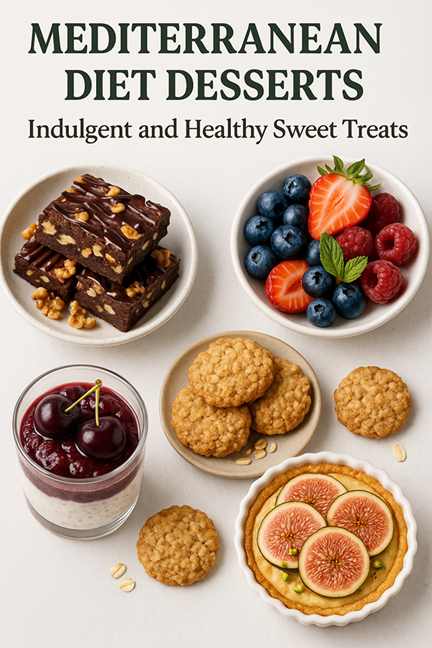
Mediterranean desserts are crafted with natural, nutrient-dense ingredients: fruits, nuts, olive oil, and whole grains. They minimize refined sugars, favoring natural sweeteners like honey and dates. Simplicity, freshness, and health-focused indulgence define these treats, aligning with the Mediterranean lifestyle’s focus on balance and wellness.
1. Greek Yogurt with Honey and Nuts
A creamy, protein-rich dessert topped with honey and crunchy nuts.
- Pros: High protein, probiotics, healthy fats.
- Cons: Contains natural sugars from honey.
- Nutrition (per 1 cup):
- Calories: 250–300
- Protein: 15–20g
- Fat: 8–12g (mostly unsaturated)
- Sugar: 20–25g
- Sodium: 50–80mg
- Fiber: 2–3g
- Source: NIH: Probiotics & Digestion
2. Olive Oil Cake
Light and moist with the goodness of heart-healthy olive oil.
- Pros: Healthy fats, lower sugar than butter cakes.
- Cons: Calorie-dense.
- Nutrition (per slice, ~80g):
- Calories: 250–300
- Protein: 4–6g
- Fat: 12–15g (mostly monounsaturated)
- Sugar: 15–20g
- Sodium: 100–150mg
- Source: ADA: Olive Oil
3. Fresh Fruit with Ricotta
Fresh seasonal fruits paired with creamy ricotta.
- Pros: Vitamins, fiber, calcium.
- Cons: Lower protein than Greek yogurt.
- Nutrition (1 cup fruit + ¼ cup ricotta):
- Calories: 150–200
- Protein: 6–8g
- Fat: 5–7g
- Sugar: 15–20g
- Sodium: 50–80mg
- Fiber: 3–4g
- Source: NIH: Ricotta Cheese
4. Almond and Orange Flourless Cake
Dense, rich, and naturally gluten-free.
- Pros: Gluten-free, high in vitamin E.
- Cons: High in calories.
- Nutrition (per slice, ~70g):
- Calories: 280–350
- Protein: 8–10g
- Fat: 20–25g
- Sugar: 18–22g
- Sodium: 100–150mg
- Source: USDA: Flourless
5. Stuffed Dates with Nuts
Sweet dates stuffed with almonds or walnuts.
- Pros: Natural energy, fiber, magnesium.
- Cons: High sugar (naturally from dates).
- Nutrition (2 pieces):
- Calories: 140–180
- Protein: 2–3g
- Fat: 5–7g
- Sugar: 20–25g
- Sodium: 0–5mg
- Fiber: 3–4g
- Source: USDA Dates
6. Fig and Walnut Tart
Sweet figs and omega-rich walnuts on a crisp crust.
- Pros: Rich in iron and omega-3s.
- Cons: Higher in sugar and calories.
- Nutrition (per slice, ~100g):
- Calories: 300–350
- Protein: 5–7g
- Fat: 15–20g
- Sugar: 25–30g
- Sodium: 120–150mg
- Source: Nutritionix Fig Tart
7. Pistachio Baklava
A Mediterranean classic made lighter with pistachios.
- Pros: Pistachios add protein and fiber.
- Cons: High in sugar and butter.
- Nutrition (per piece, ~40g):
- Calories: 200–250
- Protein: 3–5g
- Fat: 12–15g
- Sugar: 20–25g
- Sodium: 80–100mg
- Source: ADA: Pistachio
Serve this baklava with [high-protein Mediterranean foods] to balance blood sugar.
8. Poached Pears in Red Wine
Elegant and antioxidant-rich.
- Pros: Low-fat, antioxidants.
- Cons: Residual sugar after cooking.
- Nutrition (1 pear):
- Calories: 150–200
- Protein: 1g
- Fat: 0g
- Sugar: 20–25g
- Sodium: 5–10mg
- Source: MyFitnessPal Poached Pears
9. Semolina Pudding (Galaktoboureko)
A Greek classic with custard wrapped in phyllo.
- Pros: Good calcium content.
- Cons: High in sugar and butter.
- Nutrition (per slice, ~100g):
- Calories: 300–350
- Protein: 6–8g
- Fat: 15–20g
- Sugar: 25–30g
- Sodium: 100–150mg
- Source: Nutritionix Galaktoboureko
10. Almond Biscotti
Crispy, satisfying, and perfect for dunking.
- Pros: Lower sugar compared to cakes.
- Cons: Still processed.
- Nutrition (2 cookies, ~30g):
- Calories: 150–180
- Protein: 4–5g
- Fat: 8–10g
- Sugar: 10–12g
- Sodium: 80–100mg
- Source: USDA Biscotti
Tips for Healthier Mediterranean Desserts
- Opt for Natural Sweeteners: Use honey, dates, or dried fruits.
- Incorporate Nuts and Seeds: They add healthy fats and texture.
- Focus on Whole Grains: Substitute white flour with almond flour or whole wheat flour.
- Prioritize Fresh Fruits: Rich in fiber and antioxidants.
- Use Olive Oil: Replace butter with olive oil for better heart health.
Are Mediterranean diet desserts healthy?
Yes. Most are based on nutrient-rich ingredients like fruits, nuts, and olive oil, offering a wholesome alternative to traditional sweets.
Which fruits are best for Mediterranean desserts?
Figs, dates, pomegranates, oranges, and berries are popular and packed with nutrients.
Is dark chocolate allowed on the Mediterranean diet?
Yes. Dark chocolate (70% cocoa or higher) can be enjoyed in moderation for its antioxidant benefits.
Can Mediterranean desserts fit into a weight loss diet?
Yes, especially if portion control is practiced. Their fiber and healthy fat content promote satiety.
Conclusion
Mediterranean diet desserts prove that indulgence and health can coexist. Focusing on natural, wholesome ingredients, these desserts satisfy your sweet cravings while supporting your health goals. Whether it’s the creamy Greek yoghurt with honey or a slice of almond flourless cake, you’ll find options that blend flavour with nutrition beautifully.
While we focus on desserts today, remember the Mediterranean diet is about balance. Explore [Mediterranean diet] for complete nutrition
Citations:
- USDA FoodData Central. https://fdc.nal.usda.gov/
- Nutritionix. https://www.nutritionix.com/
- MyFitnessPal. https://www.myfitnesspal.com/