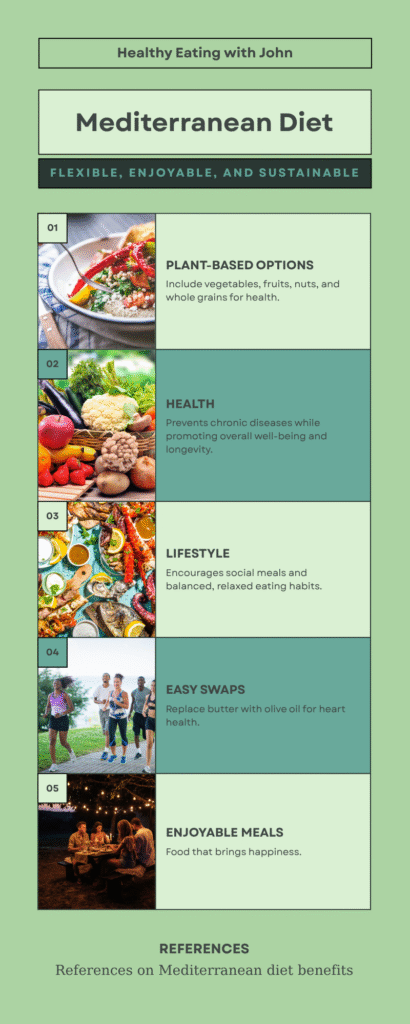
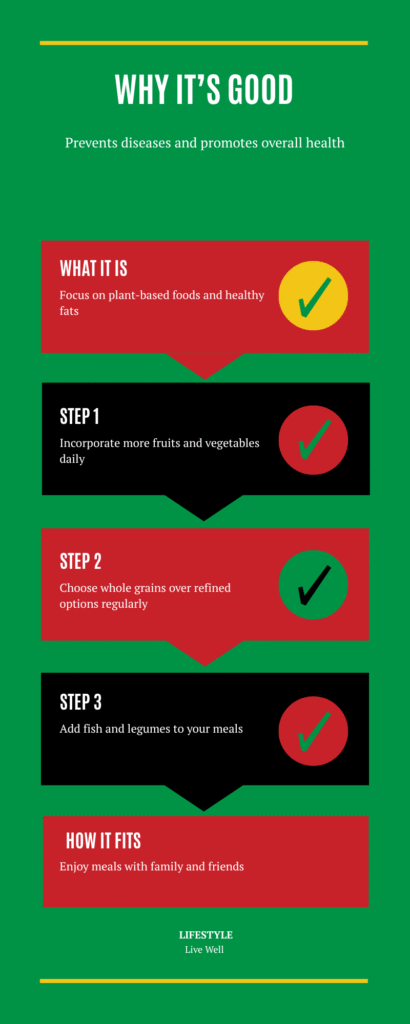
The Mediterranean diet is more than just a meal plan—it’s a sustainable lifestyle rooted in the traditions of Greece, Italy, and Spain. Known for promoting heart health, brain function, and longevity, it contributes positively to environmental sustainability. If you’re wondering how to start the Mediterranean diet effectively, this guide provides all the information you need to know.
What is the Mediterranean Diet?
The Mediterranean diet is an eating pattern emphasizing:
- Fresh fruits and vegetables
- Whole grains
- Legumes and nuts
- Healthy fats like olive oil
- Moderate amounts of fish and poultry
- Limited red meat and sweets
- Social, mindful meals
- Regular physical activity
This diet isn’t restrictive—it’s a flavorful and flexible approach to healthy living.
Key Components of the Mediterranean Diet
1. Healthy Fats
Replace butter with olive oil and enjoy foods like avocados and nuts.
2. Fruits and Vegetables
Fill your plate with a rainbow of fresh, seasonal produce.
3. Whole Grains
Choose whole grain bread, brown rice, and oats over refined options.
4. Lean Proteins
Eat fish like salmon and mackerel twice a week, with moderate poultry and dairy intake.
5. Legumes and Nuts
Incorporate beans, lentils, almonds, and walnuts into your meals.
6. Mindful Indulgence
Small portions of wine or sweets are acceptable but not a focus.
Why the Mediterranean Diet Matters: Health & Sustainability
Health Benefits
Brain Health & Cognitive Protection
Rich in leafy greens, berries, olive oil, and fatty fish, the Mediterranean diet protects against cognitive decline and lowers risks of Alzheimer’s and dementia.
Heart Health & Longevity
It reduces blood pressure, LDL cholesterol, and the risks of heart disease and stroke, promoting a longer, healthier life.
Diabetes & Metabolic Syndrome Prevention
High-fiber foods stabilize blood sugar and improve insulin sensitivity, reducing the risk of type 2 diabetes.
Anti-Inflammatory & Cancer Protection
Packed with antioxidants and omega-3s, the diet helps reduce inflammation and lower the risk of various cancers, particularly digestive system cancers.
Sustainable & Enjoyable Eating
Unlike restrictive diets, it encourages a flexible, enjoyable eating experience with a strong cultural and social component.
Environmental Sustainability
The Mediterranean diet:
- Reduces Greenhouse Gas Emissions: Compared to animal-heavy diets.
- Minimizes Land and Fertilizer Use: Emphasizing plant-based foods lessens environmental impact.
- Challenges: It has a higher water footprint and can be more costly, particularly outside Mediterranean regions.
Overall, it’s a diet that supports both personal and planetary health.
Resources: Mayo Clinic: Mediterranean Diet | NIH: MIND Diet Studies | FAO: Sustainable Diets
Step-by-Step Guide to Starting the Mediterranean Diet
Step 1: Declutter Your Pantry
Remove processed snacks and unhealthy oils.
Step 2: Stock Your Kitchen
Bring in Mediterranean staples—olive oil, beans, quinoa, fresh vegetables, and seafood.
Resource: EFSA: Olive Oil Health Claims
Step 3: Plan Your Meals
Focus on simple, plant-based dishes with lean proteins and whole grains.
Resource: ADA: Diabetes Complications
Step 4: Mind Your Portions
Eat until satisfied, practicing portion control to avoid overeating.
Step 5: Stay Physically Active
Engage in regular moderate exercise like walking, gardening, or swimming.
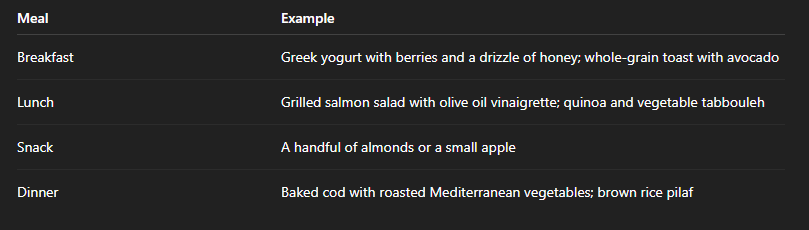
Sample Mediterranean Diet Meal Plan
Common Mistakes to Avoid
- Overeating Healthy Fats: Olive oil and nuts are nutritious but calorie-dense.
- Skipping Exercise: Physical activity is an essential part of Mediterranean living.
- Ignoring Hydration: Prioritize water and limit sugary drinks.
- Relying on Packaged “Mediterranean” Foods: Choose whole, minimally processed options.
Successful meal planning combines structure with flexibility. Stock your kitchen with staples from our [Mediterranean breakfast guide] and [anti-inflammatory foods list] to create endless healthy combinations.”
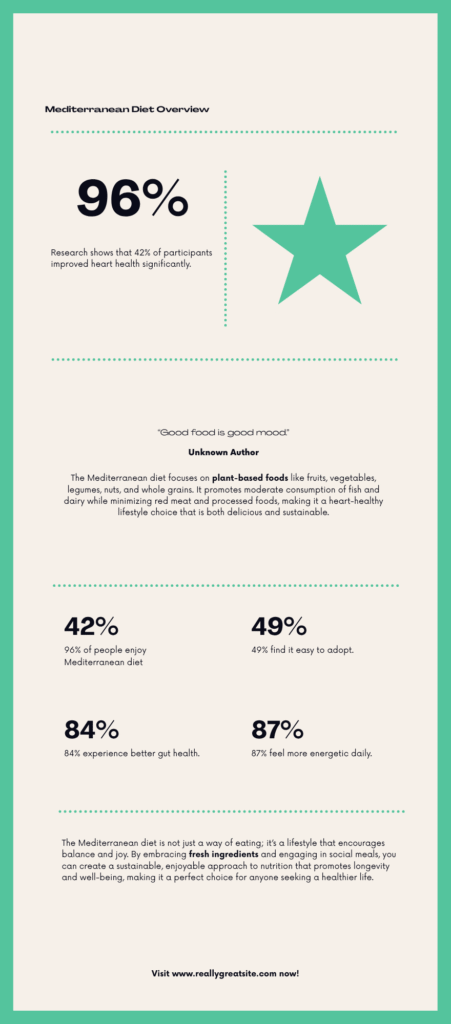
Yes, it supports gradual, sustainable weight loss through whole foods and portion control.
Absolutely. The diet is plant-centric and can easily be adapted for vegetarians.
Improvements in energy and digestion can be felt within weeks, with longer-term benefits like better heart health over months.
Yes. It has a smaller carbon footprint than meat-heavy diets but requires mindful attention to water use.
Resources
- Are healthier diets more sustainable? — American Journal of Clinical Nutrition
- The MIND Diet — Academy of Nutrition and Dietetics
- The Mediterranean Diet — Harvard T.H. Chan School of Public Health
- Mediterranean diet: A heart-healthy eating plan — Mayo Clinic
- What is a Mediterranean diet? — National Institute on Aging
Final Thoughts
Starting the Mediterranean diet is a powerful step toward better health, longevity, and environmental stewardship. Its rich flavours, cultural roots, and proven health benefits offer a sustainable and enjoyable way to nourish your body and mind.
Ready to embark on your Mediterranean journey? Focus on whole foods, stay active, and savour each meal with mindfulness and joy.
Download our Free 7-Day Mediterranean Meal Plan to kickstart your healthier, happier lifestyle today!