Takis have earned a cult following for their bold flavors and intense crunch. Whether you’re a fan of Blue Takis, Fuego Takis, or the new Takis Kettle Chips, understanding the Takis nutrition label is essential for making informed snacking decisions. In this guide, we’ll break down Takis’ nutrition facts, ingredients, health risks, and creative ways to enjoy them.
What Are Takis?
Takis are rolled corn tortilla chips known for their extreme spice and bold flavors. Produced by Barcel USA, Takis’ varieties, such as Blue Heat, Fuego, and Takis Kettle Chips, have made them a standout in the world of snack foods.
Their signature intensity appeals especially to teens and young adults, but it’s worth knowing what’s actually inside these fiery snacks.

Takis Nutrition Label Overview
Here’s a look at the typical Takis nutrition facts per 1 oz (28g) serving of Takis Fuego:

Note: Percent Daily Values are based on a 2,000-calorie diet. Individual needs may vary.
While the calorie content seems moderate, the sodium levels are considerably high, an important factor for those monitoring their intake.
Resource: USDA FoodData Central
Blue Takis vs Red Takis: Nutritional Comparison
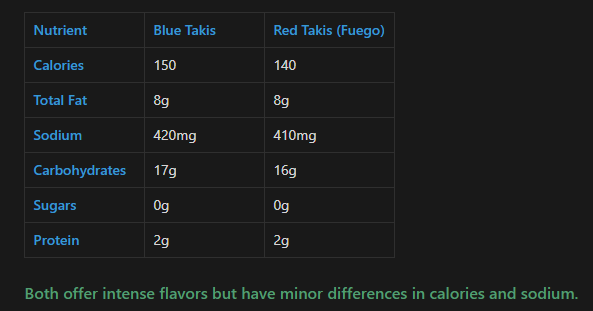
Comparing two popular Takis flavors—Blue Heat and Fuego:
Ingredients List: What’s Inside Takis?
Takis’ ingredient list explains their intense flavor and vibrant colors:
- Corn masa flour (processed with lime)
- Vegetable oils (palm, soybean, canola)
- Seasoning mix (salt, sugar, monosodium glutamate, citric acid, artificial colors like Red 40 Lake, Yellow 6 Lake, Yellow 5 Lake)
- Artificial flavors
- Chili pepper
- Sodium bicarbonate
- Yeast extract
The Takis food label highlights the presence of additives and artificial ingredients typical of ultra-processed foods.
Are Takis Healthy?
Pros:
- Low Sugar: 0g per serving.
- Moderate Calories: Manageable in small portions.
- Intense Flavor: Limits overeating due to spice levels.
Cons:
- High Sodium: Over 400mg per serving.
- Artificial Additives: Contains synthetic colors and flavor enhancers like MSG.
- Low Nutrient Density: Minimal fiber and protein.
- Processed Ingredients: Lack of whole food components.
Bottom Line: Takis are best enjoyed occasionally rather than as a staple snack.
Resource: FDA: Color Additives
Takis and Ultra-Processed Food (UPF) Classification
Recent research classifies Takis under NOVA Group 4 (Ultra-Processed Foods – UPFs) due to their industrial processing and use of additives (BMJ Nutrition, Prevention & Health, 2025) [1]. UPFs have been linked to increased risks of:
- Cardiovascular diseases
- Obesity
- Metabolic disorders
Additionally, Takis are likely considered HFSS (High Fat, Salt, or Sugar) according to the UK Nutrient Profiling Model (NPM).
Did You Know?
Younger age groups (11–18 years) are the highest consumers of UPFs like Takis, putting them at greater risk for chronic diseases.
With increasing global policies limiting the marketing of HFSS foods to minors, brands like Takis may face regulatory pressures to reformulate or restrict advertising.
New Variants: Takis Kettle Chips & More
Beyond the traditional rolled chips, Takis have expanded into:
- Takis Kettle Chips — thicker, crunchier chips
- Takis Waves — ridged potato chips
- Takis POP! — popcorn with signature Takis flavor
While the textures vary, the Takis nutrition facts for these variants still indicate high sodium and fat content, reinforcing the importance of moderation.
Upgrade Your Takis: A Creative Twist
Want a creative way to enjoy Takis? Inspired by the Easy Migas recipe from [EatRight.org], you can transform your Takis into a spicy, Tex-Mex breakfast dish!
How?
- Scramble eggs with crushed Takis for extra spice.
- Add veggies like bell peppers and jalapeños.
- Top with cheese — think pepper jack or cotija.
- Garnish with fresh cilantro or avocado.
This not only reduces food waste (use up those leftover crumbs!) but also spices up your breakfast routine.
For every spicy Takis craving, try one of these [low-calorie meal prep snacks] that deliver crunch without the calorie overload.